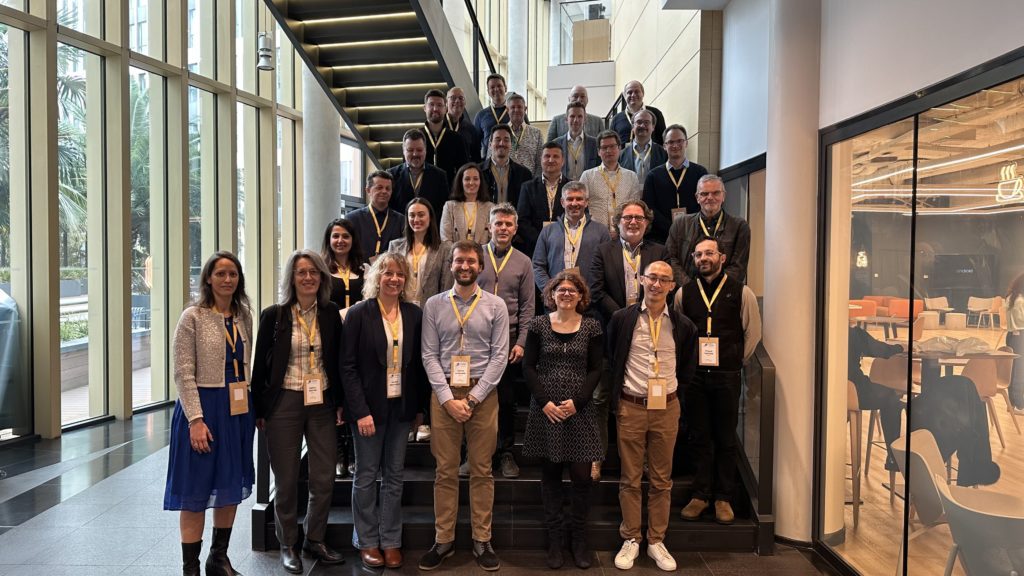
PilgrHYm brought together the members of the External Advisory Board (EAB) for a day dedicated to technical discussions and reviewing the progress of ongoing work on March 31 at NaTran’s headquarters. Attendees got a firsthand look at the progress of a project that has only just begun its second phase.
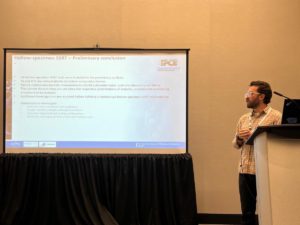
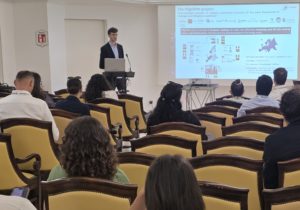
In the first session of the meeting, project partners presented the latest updates on PilgrHYm’s activities. The presentations began focusing on the selection of the representative steel grades in European gas grids by Fluxys , then the status of the testing protocols under H2 by SINTEF and the first results of the Slow Strain Rate Tests (SSRT), SSRT on hollow specimens, and fracture toughness tests carried out during the Round Robin Test by CEA LITEN.
Afterwards, Fraunhofer IWM explained the latest updates on the modelling approach of numerical developments to predict hydrogen damage. The session concluded with a brief presentation of the future steps in the development of mitigation guidelines to limit embrittlement phenomena, by Aragon Hydrogen Foundation, and in the writing of guidelines and testing protocols based on all PilgrHYm’s results, by NaTran, all of these aiming to upgrade current codes, especially the next revisión of the European standard EN1594.
The second session featured two external presentations on standardisation issues, to compare the results with industry expectations and help shape future European standards. Michael Steiner, member of the European Standardisation Committee (TC 234 WG 3), provided an update on the expected revision of the EN 1594 standard, which describes the functional requirements for pipelines for maximum operating pressure over 16 bar. Then, Bostjan Bezensek, on behalf of the European Pipeline Research Group (EPRG), offered the latest updates of EPRG’s H2 projects related to small and full-scale tests on H2, the ongoing round robin test under H2 and the RFCS funded SAFEH2pipe project. Finally, a workshop was held to review the results of a survey that examined potential directions for future PilgrHYm research.
These discussions are key to ensuring the success of PilgrHYm, as they allow for comparison of approaches, enrich the analyses, and challenge the project’s scientific direction. Through knowledge exchange, the project’s results will become more relevant and applicable, supporting the evolution of gas infrastructure in the context of hydrogen integration.